0 Get Transfer Promo Code: How to Get a Transfer Promo Code
- Travel Tips
- by Tara Malone
- 12-07-2026
Get Transfer Promo Code: How to Get a Transfer Promo Code
You land at Malpensa, open three tabs, and type in a get transfer promo code that looked valid ten minutes ago. One site says 12% off. Another says first ride only. A third has no date, no route details, and no clue whether the code works for Lake Como, Serravalle, or a late-night pickup after a trade fair.
That is the primary issue with transfer discounts in 2026. The internet is full of coupon pages, but very few explain how these codes behave on actual Milan routes, for actual travelers, under actual demand conditions. A code that works on a generic airport run can fail on a luxury fleet, a cross-border trip, or a group booking when the city is busy.
A smarter approach is to stop treating promo codes as the whole strategy. In Milan, the best-value transport decision often comes from combining direct offers, route awareness, booking timing, and knowing when a fixed-price transfer beats taxis, trains, or a fragile coupon altogether.
Table of Contents
- Your First Stop for Reliable TransferMilan Discounts
- Unlock Insider Savings for Groups and Corporate Travel
- Rethinking Your Savings Strategy for Milan Travel
- Navigating Third-Party Coupon Sites and Seasonal Offers
- How to Apply Your Code and Troubleshoot Common Errors
- Frequently Asked Questions from a Milan Transfer Expert
- Do promo codes work for group bookings during Milan trade fairs
- Is a code more likely to fail on airport routes than on generic city rides
- What should families do differently
- Are late-night arrivals a bad time to rely on coupons
- What’s the best savings move for large groups going to outlets or lake destinations
Your First Stop for Reliable TransferMilan Discounts
Before you hunt for a get transfer promo code on aggregator sites, start with the direct channel. That’s the lowest-risk move. Official offers are usually easier to verify, easier to apply, and much less likely to collapse at checkout because the route, vehicle, or date doesn’t match some hidden rule.
For Milan transfers, the practical move is simple. Check the operator’s own booking flow, subscribe to updates if they offer them, and ask for written confirmation of any promotion before paying. On a route where timing matters, that written confirmation is often worth more than a slightly larger discount from a third-party coupon page.
Start with the official booking path
Use the company site first, not because it’s glamorous, but because it reduces guesswork. On TransferMilan’s official website, the advantage is clarity: route, vehicle class, meet-and-greet options, and support are visible in one place rather than scattered across coupon blogs.
A practical sequence works well:
- Check your route first: Airport transfers, outlet runs, lake destinations, and hourly hire can have different pricing logic.
- Look for direct offers: Newsletter, returning-customer messages, or seasonal notices are often more reliable than copied coupon listings.
- Ask before booking if your trip is unusual: This matters for child seats, multiple stops, ski luggage, or large family groups.
- Keep the confirmation email: If anything changes, that message matters more than a screenshot from a coupon site.
Practical rule: A smaller verified discount beats a bigger unverified one every time when you’re arriving after a long flight.
Why direct offers beat coupon hunting
Most travelers overvalue the promo field and undervalue certainty. In Milan, transfer problems usually don’t come from base price alone. They come from flight delays, wrong pickup assumptions, bag count, and vehicle mismatch.
Direct booking channels handle those issues better because you can confirm details before the car is dispatched. That’s especially useful for arrivals at MXP, LIN, or BGY when you don’t want to argue over luggage space or discover that the discount only applied to a different car category.
A local habit worth copying is this: if you’re traveling on a tight schedule, treat official promotions as your baseline and third-party codes as a bonus, not the foundation of the booking.
A simple filter for what’s worth your time
Use this quick decision table before you chase any discount:
| Booking situation | Best first move | Why |
|---|---|---|
| Solo airport arrival | Book direct and check for official offer | Fastest, lowest friction |
| Family with luggage | Ask for vehicle confirmation in writing | Avoids small-car mistakes |
| Outlet or lake trip | Request route-specific quote | Better than generic sitewide code |
| Evening arrival | Prioritize confirmed pickup terms | Reliability matters more than headline discount |
That’s the part most coupon pages skip. They talk about savings in theory. Travelers need booking confidence in practice.
Unlock Insider Savings for Groups and Corporate Travel
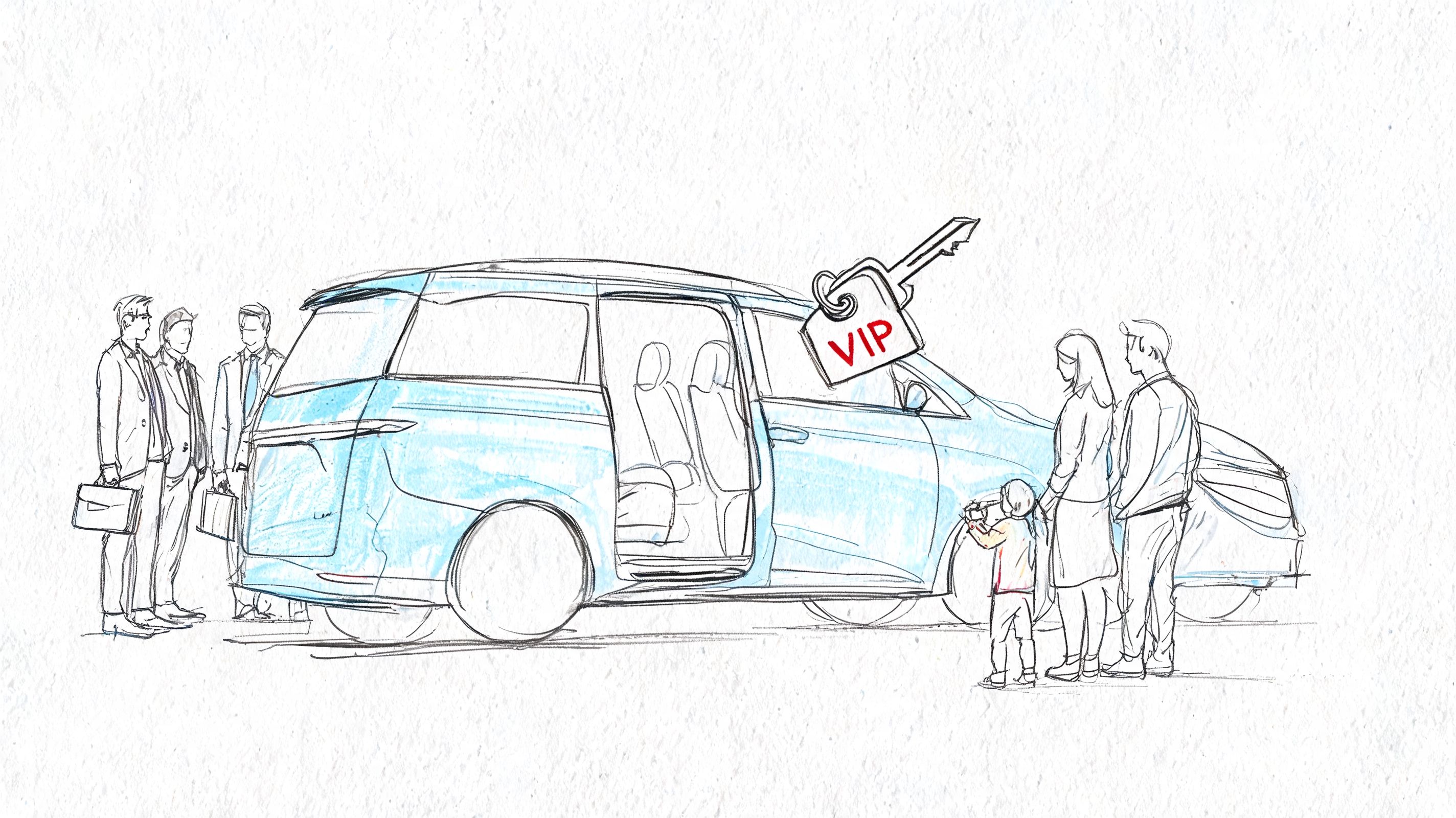
Groups save money in Milan before the promo box even appears. A six-person airport run, a wedding shuttle, or a trade fair schedule is usually priced around vehicle planning, waiting time, and route structure. Public codes rarely touch those variables.
I see the same mistake every fashion week and Salone period. Visitors search for a generic get transfer promo code, then book separate cars for arrivals that could have been grouped into one cleaner plan. The better approach is to request a customized rate early, with the actual operating details included from the start.
Where group savings actually come from
In Milan, operators quote group transport more aggressively when the brief is clear and easy to dispatch. Send the flight numbers, final destination, full passenger count, luggage count, and whether you need one transfer, a return, or a car on standby. That gives the operator room to assign the right vehicle and price the job properly.
Hotels, event planners, and concierge desks can also produce better rates than public coupon pages. They send repeat business, and their requests are usually clearer, which reduces mistakes and wasted vehicle time. For travelers, that often means a better total value, not just a lower headline number.
That matters for weddings near Lake Como, outlet trips to Serravalle, and corporate arrivals split across MXP, LIN, and BGY on the same day. One coordinated booking can cost less than several isolated reservations once you factor in waiting time, baggage needs, and missed pickup risk.
How to request a quote that gets a better result
Weak requests get generic pricing. Detailed requests get sharper quotes.
Use this format:
- Give the true passenger count: Include children, infants, and any seat requirements.
- List special luggage: Samples, garment bags, strollers, golf bags, and exhibition materials affect vehicle choice.
- Set the timing clearly: Include landing time, preferred pickup buffer, and any hard arrival deadline.
- Ask for the full plan: Round trip, multi-stop service, or hourly disposal can price better than booking each leg separately.
- Mention the event context: Design Week, major fairs, and match days change traffic patterns and pickup logistics.
For corporate travel, this is often the difference between a controlled transfer budget and a messy one. A shared dispatch plan is easier to manage than chasing individual discounts for each traveler.
Best cases for custom rates in Milan
A custom quote is usually the smarter move for these bookings:
| Use case | Why quote-based pricing often wins |
|---|---|
| Wedding guest transport | Timed pickups and late-night returns |
| Trade fair teams | Multiple arrivals, badge times, and luggage |
| Lake Como day groups | Long waits and return scheduling |
| Serravalle or FoxTown shopping trips | Flexible return times and extra bags |
| Executive roadshows | Hourly availability beats repeated point-to-point bookings |
TransferMilan tends to perform well here because the service is built around route reality, not just coupon mechanics. That matters more in Milan than many visitors expect. During busy periods, the cheapest-looking booking can become the most expensive one if the vehicle is wrong for the job or the pickup terms are vague.
For a broader comparison of when point-to-point service works best and when a tailored booking makes more sense, review this guide to car service in Italy for 2026.
Rethinking Your Savings Strategy for Milan Travel
A discount isn’t always a deal. That’s the sentence many travelers need to hear.
The usual comparison is too shallow. People compare one promo-coded transfer against the sticker price of something else. A Milan local compares the full trip: airport exit time, luggage handling, queue risk, language friction, route certainty, and whether the final price stays stable when the city is busy.
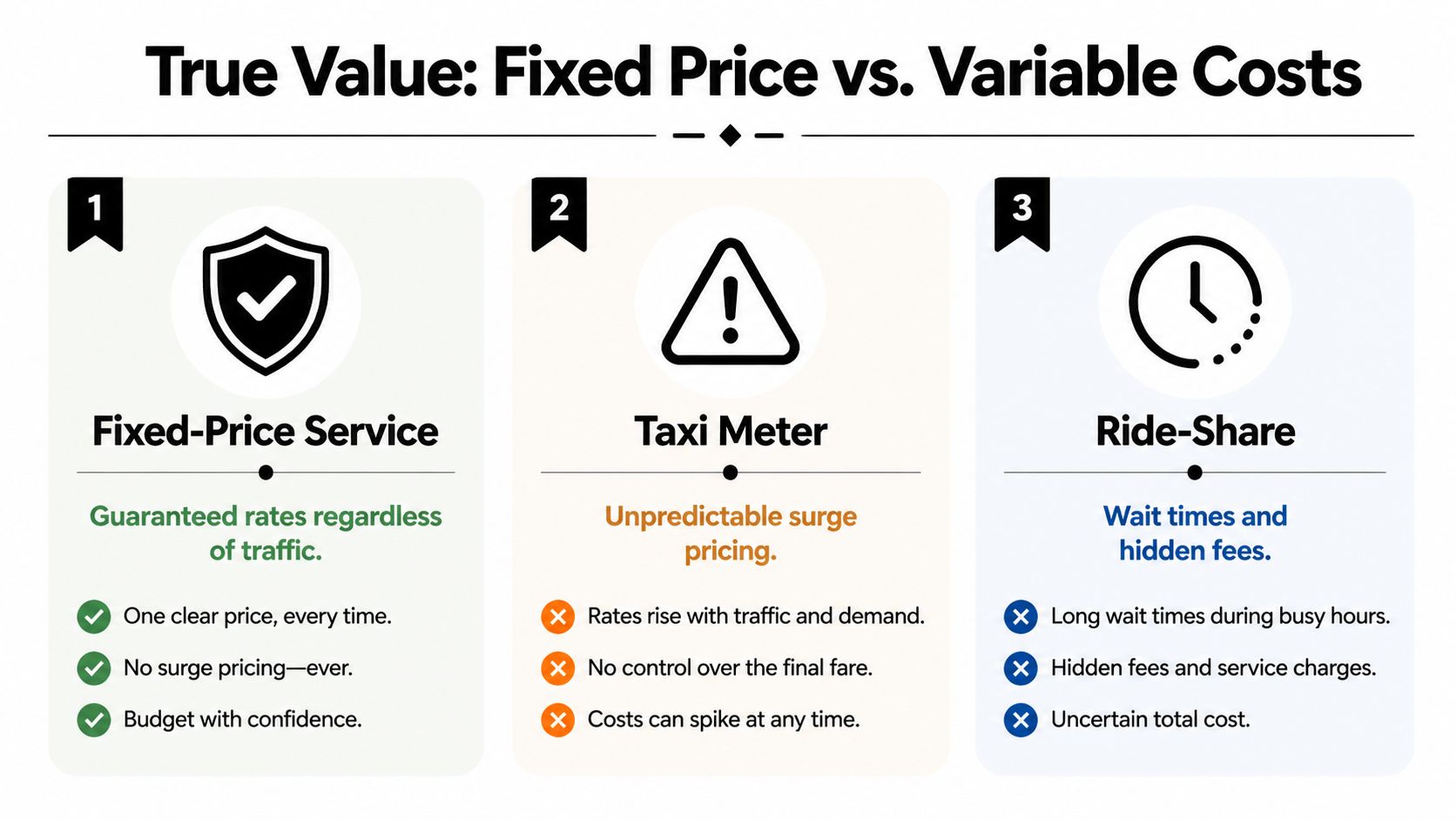
Fixed price versus moving parts
Take a typical arrival into Milan. You have three broad choices: taxi, public transport, or pre-booked transfer.
A taxi can be convenient, but it’s still variable in feel and process. Public transport can be cost-effective, but it stops being simple when you land tired, carry heavy luggage, travel with children, or need to reach an address that isn’t close to the rail line. A pre-booked transfer gives you door-to-door continuity. That matters more than many first-time visitors expect.
Recent analysis for 2026 found that codes like VISA11 can fail up to 30% of the time on specific airport routes because of unstated rules, which is exactly why transparent fixed pricing has real value when you want certainty rather than coupon volatility, as noted in this route-focused analysis of TransferMilan code behavior.
The comparison travelers should actually make
Use this framework instead of asking only “What’s cheapest?”
| Option | Usually works best for | Main trade-off |
|---|---|---|
| Taxi | Simple city runs with light luggage | Less control before arrival |
| Train or bus | Budget-focused solo travelers | Extra walking, transfers, less comfort |
| Pre-booked fixed-price transfer | Families, business trips, late arrivals, groups | May look higher at first glance |
Local advice: If you’re landing at an unfamiliar airport and going straight to a hotel, exhibition hall, or a lakeside town, certainty has financial value even when it doesn’t appear as a coupon line item.
Where public transport still makes sense
Buses and trains aren’t the enemy. They’re useful when your trip is structurally simple. If you travel alone, carry one bag, arrive in daylight, and your hotel sits near a major station, public transport can be perfectly sensible.
But Milan trips often stop being simple very quickly. Linate can be easy for some city runs. Malpensa to a neighborhood address with luggage is different. Bergamo after a low-cost evening arrival is different again. Add rain, trade fair congestion, or a family group, and the “cheap” option can stop feeling cheap.
Why value changes by traveler type
The same route has a different best option depending on who you are.
- Business traveler: Time loss is expensive. Reliability usually beats coupon chasing.
- Family: Door-to-door service reduces stress, especially with children or strollers.
- Shopping group: Return flexibility matters because bag volume changes.
- First-time visitor: A clear pickup and fixed route remove a lot of friction.
That’s why the get transfer promo code question is worth reframing. Don’t ask only whether you can save on the booking page. Ask whether the booking method saves you from the hidden costs of uncertainty.
Navigating Third-Party Coupon Sites and Seasonal Offers
Third-party coupon sites aren’t useless. They’re just noisy. Some list active offers. Some recycle expired codes for months. Some show sitewide discounts that never had route-specific validation in the first place.

If you want to use them well, treat them as leads, not proof. The value is in quick filtering.
What the 2026 test data actually tells you
Manual tests on 26 codes in 2026 showed an 88% overall redemption success rate, but that dropped to 65% during July and August. The same testing found 24% of failures came from mistyped codes and 15% from inventory unavailability for luxury fleets, according to manual coupon verification notes for Transfer offers.
Those figures explain a lot of real traveler frustration. A coupon can be “active” in a database and still fail in practice because the car category, route, or booking window no longer qualifies.
How to judge a coupon page fast
Use a short screening process before you waste time:
- Check route language: If the page only says “sitewide,” assume nothing about airport runs, lake transfers, or cross-border service.
- Look for vehicle exclusions: Luxury categories fail more often than standard sedans or minivans.
- Treat summer cautiously: If your trip is in peak season, test earlier and have a backup plan.
- Avoid typo traps: Codes with similar characters often fail because travelers confuse letters and numbers.
If you want a broader list of travel-related savings sources to compare against coupon aggregators, this roundup of travel promo code resources from Cashback Australia is a useful starting point. It’s helpful as a comparison tool, especially when you want to see how different travel categories present offers and terms.
Seasonal offers that are worth a look
The better seasonal opportunities tend to appear when demand is softer or when a booking channel wants to push app usage, first-order activity, or certain routes. Ski-season transfers, shoulder-season city breaks, and non-peak airport bookings are often easier environments for promotions than busy exhibition weeks.
What most travelers miss is that route-specific usefulness matters more than headline percentage. A smaller discount that works on your exact pickup and vehicle beats a bigger one attached to a generic promise.
Don’t judge a coupon by the banner. Judge it by whether it survives checkout on your actual route and car class.
That’s the difference between coupon collecting and booking discipline.
How to Apply Your Code and Troubleshoot Common Errors
You land at Malpensa, your driver options are on screen, and the promo code that looked fine five minutes ago suddenly does nothing. In Milan, that usually comes down to booking logic, not mystery. The route, car type, timing, and booking flow have to line up before any discount appears.
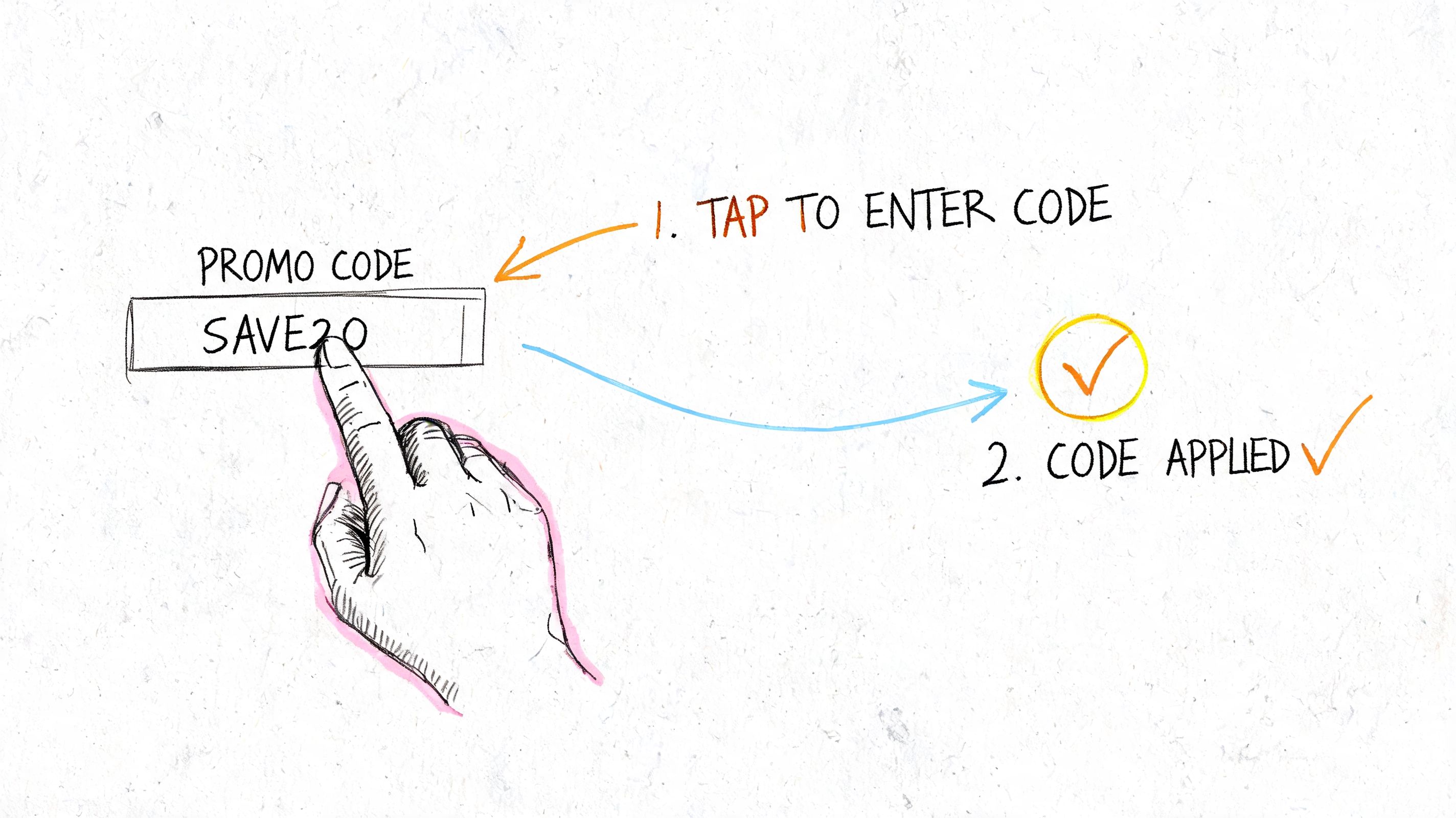
Apply the code only after the trip details are fully set. I always tell travelers to treat promo codes as the final check, not the starting point. If you test too early, then change the airport, add passengers, or switch from a sedan to a van, the system may recalculate and drop the offer. On TransferMilan’s live booking page for Milan transfer reservations, the practical method is simple. Build the actual trip first, then check whether the final payable total changes.
A clean application routine
Use this order:
- Set the booking details first: pickup, destination, date, flight timing, passenger count, and vehicle class.
- Paste the code exactly: Similar-looking letters and numbers cause more failures than travelers expect.
- Pause for the system response: Give the page a moment to validate before clicking again.
- Confirm the actual price reduction: A success message means little if the total stays the same.
One extra Milan tip. If you are booking around Salone del Mobile, Fashion Week, or a major fair at Rho, recheck the price after every edit. Event-period inventory changes fast, and a code that worked on one vehicle category may stop applying when only premium vehicles remain.
Why some valid-looking codes still fail
A code can be real and still be unusable on your booking. That happens most often when the offer is tied to a narrow condition such as first-time use, a specific route family, a minimum spend, app-only checkout, or a limited vehicle category.
I see this often with airport runs, lake transfers, and group bookings. A traveler finds a public code, enters it correctly, then assumes the site is broken. In practice, the system is usually rejecting one booking condition in the background. The fix is to check the fare rules, then decide whether it is worth changing the car class or whether a direct quote gives better value.
Fast troubleshooting checklist
| Problem on screen | Likely cause | Best response |
|---|---|---|
| Invalid code | Typo, expired offer, or account restriction | Paste again, then test a different current offer |
| Code accepted but no discount | Vehicle, route, or minimum spend rule not met | Review the booking terms and compare another car class |
| Error during checkout | Session issue or slow page response | Refresh once, rebuild carefully, and retry |
| Code disappears after editing trip | The route or fare category changed | Reapply the code only after all trip details are final |
| Border or custom-route rejection | Manual pricing rule applies | Request a direct quote instead of forcing checkout |
If a code still fails after one careful retry, stop there. Repeated attempts waste time and can muddy the booking session. For Swiss-border trips, late-night airport pickups, and multi-stop itineraries, the better savings move is often a reliable fixed quote from a local operator rather than chasing a headline discount that was never set up for your route.
Frequently Asked Questions from a Milan Transfer Expert
Travelers usually ask the same question in different forms: “Will this code work for my trip?” The honest answer is that it depends less on the code name and more on the booking context.
Do promo codes work for group bookings during Milan trade fairs
Not reliably enough to build your whole plan around them. Data on group bookings shows that public promo codes often become unreliable during major Milan trade fairs when demand spikes 40%. The same analysis notes that app-exclusive codes may also fail for large vehicles such as 55-seat coaches, which is why direct negotiation often works better for groups, as described in coupon reliability notes for event-period and large-vehicle bookings.
For planners, that means one thing. Don’t treat a public get transfer promo code as guaranteed transport policy for an event team.
Is a code more likely to fail on airport routes than on generic city rides
Yes, that can happen. Airport routes often carry extra booking rules, especially when the transfer is fixed-price, tied to a specific fleet type, or restricted to new customers. That’s why a code that looks “active” on a coupon page may still fail in the final booking step.
If your arrival matters, use the code as an optional savings tool, not as the foundation of the transport plan.
What should families do differently
Families should focus on booking fit first. The discount matters less than the right vehicle, enough luggage space, child seat availability, and a pickup process that doesn’t force extra walking after arrival.
The best family bookings are the boring ones. Clear confirmation, no surprises, enough space, and a driver who knows exactly where to meet you.
Are late-night arrivals a bad time to rely on coupons
Usually, yes. Late arrivals amplify every small failure. If the code breaks, you don’t just lose a discount. You lose time while tired, in a queue, often with limited patience for troubleshooting.
For evening landings at MXP, LIN, or BGY, reliability should outrank a speculative coupon unless the discount has already been verified on your exact route.
What’s the best savings move for large groups going to outlets or lake destinations
Ask for a quote built around the whole trip. For a Serravalle run, a Lake Como outing, or a multi-stop day, the route itself often creates more savings opportunity than a generic public code. Organizers who ask for the full transport plan usually get a cleaner result than passengers trying to stack one-off offers.
The cheapest-looking booking is not always the most economical trip. Milan rewards travelers who book for the route they actually have, not the coupon they hope will work.
If you want a dependable alternative to promo-code roulette, TransferMilan LLC is worth contacting directly. They handle fixed-price transfers from Milan airports, city rides, business travel, lake trips, outlet runs, weddings, and larger group transport across northern Italy with written confirmation and practical local support.